Hope And Help For The Holidays

Cancer changes all parts of your life…including how you navigate through the holidays. As daunting as December may seem – yes – you CAN experience hope and light in this season. As you’ve likely learned throughout the challenges in your cancer journey, every step you take to move forward can bring strength to your soul.
Your Emotions Are Real
Many overwhelming emotions like anger, anxiety, depression, loneliness, denial can be magnified during holidays…all while others around you are happy.
- Acknowledge each emotion as they occur and possible triggers from past carefree holidays.
- Talk about your feelings to a friend or loved one or write them down in a journal.
- Thankfulness and practicing kindness can take the edge off intense emotions.
- Write down each day something you are grateful for.
Prepare And Plan
Planning can help reduce the overwhelm and stress sometimes associated with the holidays.
- Planning strategies:
- Think about which holiday tradition(s) or activity(s) are most important to you.
- Consider the effort involved and how much you are up to do this year.
- Prioritize each activity, taking into account if you will have help.
- Decide what and how much you’re going to do – cut back if necessary.
- Allow for flexibility to change plans and activities.
- KISS – Keep it Simple Sweetie in these areas!
- Holiday cooking and decorating
- Gift-giving – shop online. Send gifts directly to recipients.
- Creating new traditions
- Ask for help.
Dealing With Others – Isolation Or Interaction?
- Set boundaries with others in your life that are comfortable for you.
- Try to spend time with people who understand your journey as best as possible and who have been a source of comfort and help through your diagnosis and/or treatment.
- Recognize your need to be alone OR to be around others. Aim for a healthy balance.
- How to handle holiday invitations and events with less stress:
- Decide ahead of time whether to accept or decline invitations.
- You can shorten your visits.
- It’s okay to say “no”.
- Make decisions based on your own needs and not others’ expectations.
- Reach out to others with a card or a phone call who are also struggling or alone.
Take Good Care Of Yourself
- Be mindful of your physical and emotional limitations and pace yourself.
- Take time to rest – nap when you need one, if possible.
- Consider healthy food choices: try to limit high fat, high sugar foods.
- If you decide to go to someone’s home for a holiday meal, check what’s on the menu.
- Try to exercise or keep moving. Exposure to sunlight is beneficial.
- Remind yourself how you found strength through diagnosis and treatment.
- Participate and continue in wellness programs through Support Connection or a survivorship center.
- Continue stress-reducing practices you are currently benefiting from.
- Let go of what you can’t control – a stress-buster!
- Gratitude goes a long way toward good health.
- Remember to breathe…the deeper the better.
Just as your cancer journey is as unique as you are, so are your needs during this season. Wherever you are on this journey, hope and joy are possible in the midst of difficulties.
REMEMBER: Support Connection Peer Counselors are here for you to listen and help you navigate this holiday season and year-round.
Take Time to Socialize: It’s Good For You!
Have you ever wondered why you often feel better when you get together with friends, enjoy a change of scenery or share some laughs? It isn’t an accident and you can almost always rely on it.
After a cancer diagnosis and a journey through treatment, regardless of where we are in the process, many of us search for strategies to give us confidence that we’re doing all we can to manage our disease. We attend to our medical appointments and tests. We consider nutritional modifications or changes in our physical and mental exercise habits. We look for new ways to develop stress management skills.
All of these things can be beneficial and important to our health and confidence. But… are we taking advantage of the most enjoyable of strategies? That strategy is socializing. It’s easy to think of socializing as trivial or unimportant. But it’s really one of the simplest and most valuable tools you can use to help you through any tough time.
Laughter
One of the natural by-products of spending time with others is laughter. Everyone knows there’s truth in the old saying “Laughter is the best medicine.” Many studies can be cited which demonstrate the physiological impact and benefits of laughter. But common sense tells it all: laughing makes you feel good, brightens your day, and gives you a breather that can carry you through whatever your next steps might be.
Give Your Mind A Break
Even when laughter isn’t part of the equation, just being with others makes a difference. Most people report they feel better when they take time out to engage with others. The simplest social interactions can distract you from whatever is on your mind and give you a “vacation” from day-to-day worries. Those issues may not go away, but after a break from them, they somehow feel lighter and more manageable.
Making the Time
Taking advantage of socialization can be a challenge. As women, we’re masters at putting others at the top of our “to do” list. We feel guilty if we take time for ourselves. We can’t be convinced that doing something we want to do is just as important and valuable as doing something we have to do. But, as one young woman said in a recent email: “I need to remember to make myself a priority.” Wise words we all need to take to heart.
When You’re Ready
How you feel about socializing can change over time. When faced with cancer diagnosis and treatment, your mind overflows with new information you never expected to deal with. Your emotions can be all over the map, changing from one day to the next. While immersed in this, going to a party or family gathering, even hanging out with friends on the soccer field or at the coffee shop, may seem unbearable. As time goes on, you might start to feel like you want to get “back to normal.” You slowly dip your toes back into the pool that is your social life, looking for places and activities that fit into your comfort zone.
How We Can Help
At Support Connection, we design our wide variety of programs and activities with one goal in mind: Making it easy for you to spend time with others in whatever way works for you. Not good at small talk? We have programs with fun activities to focus on. Worried you won’t know anyone? There’s always a Peer Counselor there to make introductions and put everyone at ease. Feel you’d like to talk but not sure where to start? A support group will get that started for you. Worried you might cry? That’s okay with us. You may end up laughing too!
The biggest benefit of all: You’ll never have to wonder if the person sitting next you understands what you’re going through. No matter what phase of “living with cancer” you’re in at the moment…. even if you’ve never joined us before…. you’ll be among friends at any of our programs.
Take Action
Make a vow to yourself: Spend time with family, friends, and peers with common interests. Give yourself a chance to be with others so you can share joys, struggles and laughter. Check out all the programs and activities on our website and call us to register. Get out of the house and away from your desk. Socialize. It’s good for your health.
To find programs and activities that will work for you:
- Visit our website often. Check our calendar, social activities page, education and wellness page, and support group page.
- Join our email list: Click here to receive monthly updates on upcoming programs.
- Contact our Peer Counselors: They’ll help you choose programs to fit your needs. Call 914-962-6402 or toll free 800-532-4290. Or, send them an email.
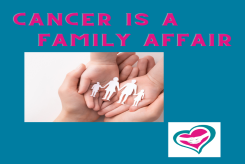
Cancer is a Family Affair
There is no avoiding the reality that a cancer diagnosis affects everyone in the family. It naturally changes the life of the person who’s been diagnosed, but it also affects people who are close to them. As with any family issue, everyone comes to the table with their own perspective and feelings. In the case of a medical crisis, this inevitably includes individual fears and a sense of uncertainty. Spouses may try to protect each other in different ways. Communication is likely to be deeply personal, and how it is managed can be deeply flawed, even with the best of intentions. Grant yourself and your loved ones grace and forgiveness every step of the way.
“When a woman is diagnosed with breast cancer, it can blindside the men who love her – husbands, boyfriends, fathers, sons. It’s not just a ‘woman’s issue,’ say the men who’ve been affected. But many of them know little about the disease itself and find themselves at a loss as to how to help the women they love cope emotionally (much less cope themselves).” ~ Gina Shaw, WebMd Cancer Center
At Support Connection, we understand that it’s not always easy to know how to help and be supportive. Speaking with others who are in the same situation is an excellent way to learn, get ideas, and feel less alone. In support of this, we offer: For Men Only, Let’s Talk: An Open Discussion For Men With A Spouse Or Partner Going Through Cancer.
“Being with a group of guys with similar circumstances – guys who might be having a difficult time – is helpful. And of course, the amount of knowledge to be shared is priceless. I think support is not as much about us and what we get. I think it’s about being able to give and provide support to our spouses. It helps to deal with emotions without making it just about yourself. It also helps to be prepared when the unexpected shows up, as there is always an uncertainty about the future and fear that accompanies that.” ~ David Tartaglia
We also understand that in a different circumstance, learning how to cope with the grief and the impact loss inevitably has on your life is hard to do alone. Speaking with others who have also been through it is an excellent way to learn and feel less alone. In recognition of that, we offer: It’s Okay to Grieve, Let’s Talk: An Open Discussion for Men Living With Loss.
“Grief’s pull favors withdrawal. Friends lend a helping hand for us to start to pull free from the grasp of grief. After my wife’s “Celebration of Life” gathering, a friend forwarded a link for a Support Connection zoom session: An Open Discussion for Men Living with Loss. This motivated me to join the Support Connection Men’s Group. The group offers conversation about how to keep something deeply personal, that needs to be held onto, vibrant in itself yet also strongly dependent upon locking into new bonds, which wellbeing urges us to build.” ~ Paul Del Frari
Both of these Open Discussion Men’s Groups are facilitated by men who have navigated this journey. The Discussions are held via Zoom and open to men nationwide who have or had a spouse or partner diagnosed with breast, ovarian or any other gynecological cancer.
To learn more about Support Connection’s Men’s Groups, click here
In addition, these articles, written by men traveling this path, are a valuable resource:
As is this article written by Gina Shaw, posted by WebMd Cancer Center:The Guy’s Guide to Breast Cancer
The Power of Community
Embrace a Community of Cancer Support
A sense of community is based on a common bond used to bring people together to advocate and support each other. No matter its base of individuals, the common bonds of mutual respect, understanding, appreciation, and support that make up any community can be a powerful way for people to feel accepted and validated. It is human nature to need a sense of belonging, and that sense of belonging is what connects us to the many relationships we develop. While the cancer community might not be one you chose to join, you will find no shortage of “welcome to the community” support systems, each of which can be a foundation upon which to launch your journey and/or a foundation upon which to rest.

A cancer diagnosis brings with it a million what ifs and even more questions. And there surely is not any one right or wrong, one-size-fits-all answer to any of them. As the saying goes, “take what you need” from this article, with the ultimate “take” being that you know your situation, your family, your medical professionals, your career, your finances, and most importantly yourself best. Do your homework, gather your resources, gather your strength, your courage, and resilience you didn’t even know you had until you needed it most … and do your very best to begin your journey of living with cancer. Most importantly, never forget that you are not alone.
Cancer is a family affair
There is no avoiding the reality that a cancer diagnosis affects everyone in the family. As with any family issue, everyone comes to the table with their own perspective and feelings. In the case of a medical crisis, this inevitably includes individual fears and a sense of uncertainty. Spouses may try to protect each other in different ways. Parents may want to protect their children, and this will likely look different depending upon the children’s ages. Children may want to protect their parents, too. Communication is likely to be deeply personal, and how it is managed can be deeply flawed, even with the best of intentions.
Cancer (as with other medical crises) can also impact family relationships – some even report it strengthens relationships. Everyone in the family has a new path to navigate once a diagnosis is made, and this is likely to include a rollercoaster of emotions, where every day will be a different hill, be it up- or down-hill. Allow yourself to feel all of the feels, and understand that your family will, too. Grant yourself and your loved ones grace and forgiveness every step of the way. You and your family are a team, and each player on the team has a different, important role to play. Embrace the teamwork!
Friends, Neighbors, Colleagues
Women are natural caregivers. Unfortunately, accepting care and help doesn’t always come as naturally. Whether it’s day-to-day errands/chores/job responsibilities or the ups and downs of mixed emotions, your friends, neighbors, and colleagues can and more than likely will want to help. Offer them the gift of allowing them to be there for you. And don’t hesitate to communicate openly regarding exactly what you need that help to look (or not look) like.
Faith Based / Spiritual Organizations
Studies show that spirituality can be a source of strength and a powerful coping mechanism, creating a positive mental attitude that may improve the well-being of both patients and their caregivers. Whatever your faith or spiritual beliefs and/or practices are, letting go through prayer or meditation and letting your mind and emotions take a break from the physical toll cancer and worrying about cancer might bring has been shown to have a very uplifting and positive effect.
Local Hospitals, Cancer Treatment Centers/Medical & Mental Health Professionals
When it comes to looking for trustworthy care and support, your local hospitals and cancer treatment centers can be valuable assets and excellent community partners. Staffed with medical and mental health professionals who are cancer experts and have comprehensive experience in the cancer field, you will likely find resources that take care of all of your physical and mental/emotional health needs and beyond.
Individual Counseling
When cancer invades your life, it’s hard to know how to proceed. Questions, worries, fears, uncertainties will likely be unwelcome visitors into your world. It can be a long journey with many twists and turns along the way. It begins with diagnosis but doesn’t end when treatment is over. When you’re coping with cancer, or if a loved one is affected, consider one-on-one counseling. Receiving knowledgeable, personalized support can make all the difference.
Support Groups & Open Discussions
Fear, anxiety, sadness, and anger are all common emotions felt by people dealing with cancer. Finding a way to express these emotions can be challenging. We often hide our true emotions to avoid worrying friends, family, and even our employers. Instead, these emotions can take hold in our minds and become very overwhelming. Support Groups can provide a safe place to share with others who are having similar experiences. While some women prefer to talk, others prefer to listen. Hearing from others who have been there, who are going through challenges, managing side effects, making difficult decisions, processing feelings and concerns, venting their frustrations, can help you feel connected and understood.
Education & Wellness Groups
Knowledge is power. Educational webinars and other instruction can be both comforting and empowering. Wellness takes into account your lifestyle as a whole, including your mental, emotional, and physical health. Addressing each of these needs is important as you travel your own cancer path. Exercise, nutrition, wholesome activities of all sorts are important in maintaining an overall healthy lifestyle. Together with your medical care, these will enable you to be at your best throughout your journey.
Social Activities
While it might be hard to grasp this concept, it is important to take a break from cancer when you can. Seek out activities that allow you to live in the moment, relax, and have fun. Enjoy the everyday things going on in your lives as well as a change of scenery. Enjoy the things that make you laugh and feel a sense of accomplishment, too!
Support Connection is a powerful example of community support
As a not-for-profit organization that provides emotional, social, and educational support to women, their families and friends affected by breast, ovarian, and gynecological cancer. Support Connection’s free and confidential programs and services include:
- One-on-One Peer Counseling – confidential, free, unlimited, and available nationwide via a toll-free support line or email. What sets Support Connection apart from the crowd is their professional Peer Counselors on staff, all of whom are cancer survivors themselves. They can talk with you about living with cancer from the perspective of someone who’s been there.
- Monthly support groups – a variety of support groups for women with breast, ovarian, or gynecological cancer and support groups for their husbands or partners are offered throughout the year. They are led by facilitators who are cancer survivors themselves.
- Open Discussions which address specific topics pertaining to living with cancer. Participants share and learn from one another.
- Education and Wellness Workshops which are focused on the needs of mind, body, and spirit, to enhance quality of life while living with cancer.
- Social Activities which provide a way to relax and enjoy spending time with other women who have also heard the words “You have cancer.”
While you are pursuing treatment and beyond, you and your family are living with cancer, so with the support of whatever your community looks like, try to live each day to the fullest as often as you are able. At Support Connection, we design our wide variety of programs and activities with one goal in mind: to be a comforting and empowering resource for you and your loved ones for as long as you need us. We’ve Been There. We Care.
Top Reasons to “Test-Drive” a Support Group
By Denise Rodman, Support Connection Peer Counselor
Fear, anxiety, sadness, and anger are all common emotions felt by people dealing with cancer. Finding a way to express these emotions can be challenging. We often hide our true emotions to avoid worrying friends, family, and even our employers. Instead, these emotions can take hold in our minds and become very overwhelming.
What if there was a way to share these emotions in a safe place with others who are having similar experiences? That safe place could be a Support Connection support group.
Benefits of support groups
The National Cancer Institute website shares much useful information about coping with cancer. For example, this article focuses on the benefits of support groups. It lists some of the ways support group participation can enhance quality of life, such as:
- Help you feel better, more hopeful, and not so alone
- Give you a chance to talk about your feelings and work through them
- Help you deal with practical problems, such as problems at work or school
- Help you cope with side effects of treatment
I recently asked our support group facilitators about the value and benefits they observe in the groups they lead for us. Here are some insights they shared:
- What I learned is that women who attend our groups are committed to each other despite their struggles.
- Confidentially of our support groups allows our attendees to share their stories with confidence.
- Cancer is hard to talk about and support groups offers a safe place.
- Every support group is different, and every meeting is different.
- The most rewarding part is watching a scared woman come to their first few groups tearful and upset, and over time they become the ones helping new members that need encouragement.
Take a test drive!

Personally, I have attended my fair share of support groups. One lesson I’ve learned is this: You need to find the right group for you. Support groups are not “one-size-fits-all.” If you’ve tried a group in the past and got the feeling it wasn’t for you, there might be different group that fits your needs.
Think of it as a test drive. And you can take a few test drives until you find what you want and what works for you. There isn’t a right or wrong way to find support. You just need to take the leap. When you find the right group, it can feel like a lightbulb going off.
Where your test drive can take you
Hearing someone else share how they’re feeling allows you to process emotions, feel connected, and lessens the feeling that you’re the only one who feels a certain way. In the beginning you may feel like a stranger to the other group members. But, as you share and listen, these group members become confidants. There is no judgement. Everyone understands where you’re coming from. Group members offer one another coping strategies, encouragement, and in some instances, hope.
While some women prefer to talk, others prefer to listen. Hearing from others who have been there, who are going through challenges, managing side effects, making difficult decisions, processing feelings and concerns, venting their frustrations, can help you feel connected and understood.
What you need to know to step into the driver’s seat
Support Connection offers a variety of groups throughout the year. They are led by facilitators who are cancer survivors themselves. And they are confidential. What happens in group stays in group.
If you’re interested in trying one of our monthly support groups, take a look at the list on our website. We also have topic-focused Open Discussions. Some of these meet just once, but many of them meet at regular intervals throughout the year, offering another avenue for group support.
When you find a group that fits into your schedule that you’d like to register for, or if you have any questions about our groups, call to speak with one of the Peer Counselors on our staff. They’ll be happy to help! Call 800-532-4290 or 914-962-6402.
Is Laughter the Best Medicine?
By Denise Rodman, Support Connection Peer Counselor
In this article, Support Connection Peer Counselor Denise Rodman shares some things she recently learned about using laughter as a tool for coping with cancer.
After being diagnosed with cancer, it can be difficult to stay positive, curb anxiety and shut your brain off at night. Social media, television shows, movies and books can sometimes provide an escape from obsessing thoughts and concerns. However, these outlets can also cause reminders of illness or hit too close to home, causing thoughts to escalate in a direction we were trying to avoid.
During diagnosis and treatment, I found comedies and humorous situations could really take the edge off. They could bring a smile to my face and lead to a good laugh. Wanting to continue this discovery of humor, I felt an urge to uncover more about joy and laughter.
I recently attended a webinar which shared the importance of laughter in our lives. The presenter was a laughter coach and yoga instructor. The idea of laughter and yoga seemed very different and a perfect avenue to explore.
What I learned in this webinar is that laughter is in fact scientific. Your body loves when you laugh. Laughter begins in your gut, increases oxygen intake, and causes endorphins to be released in your body. These changes in the body can lower stress, boost your immune system, make you feel better and put you in an improved mood.
Another wonderful point about laughter is it can be done standing, sitting, or even lying down. So, whether you’re recovering from surgery, receiving your infusion, standing in line or have physical restraints it is possible to “exercise” your laugh.
The laughter coach encouraged us that “We need to be serious about our humor.” He shared some other interesting ideas as well:
- The thought of being serious about something silly might be a challenge but is an important one.
- Laughter gives us an opportunity to celebrate our lives.
- Laughing when you’re alone allows your mind to move to more positive emotions and thoughts. It can also spark a thought of wanting to share with others and motivate you to seek support.
- Sharing a laugh with a friend, a family member or even a stranger can give a sense of togetherness.
After reflecting on what I learned from the webinar, I thought of some other tips to bring laughter into our lives:
- Watch comedic movies or television shows
- Watch a standup comedian routine
- Follow comedy accounts on social media
- Read a humorous book or joke book
- Listen to a funny podcast
- Look through amusing photos
- Wear a silly accessory
Many going through cancer feel alone; laughter can be a bridge to feel more connected. So maybe the next time you’re struggling, ask a friend if they know a good joke. And if someone you know is struggling, share one of your favorite jokes with them.
Feel good knowing you’re making your body and mind feel better. Let out a belly laugh, a chuckle, a cackle or even a little giggle. Feel confident expressing your body’s joy.